 ×
×
Never been easier.Still bloody hard.
The reality of solo entrepreneurship in the UK in 2026.
Based on a survey of 50 independent founders and freelancers, and in-depth interviews with four of them.
Never easier. Still hard.
The UK has never had more people working for themselves. Since 2010, the number of non-employing businesses has grown by 25%, outpacing employing businesses over the same period.1
In 2023, just under 30% of working-age adults were either running a business, actively trying to start one, or planning to within three years.2 Among 18 to 29 year olds, 13% were involved in entrepreneurial activity compared to just 5% in 2008.3
The tools available to those founders have changed dramatically. AI is reducing the complexity of early-stage business operations, lowering barriers to entry, and expanding what a single person can realistically achieve.
And yet the experience of going it alone remains genuinely hard, in ways that are specific, consistent, and largely unchanged over recent years. The administrative burden catches founders off guard. Financial stress is real and ongoing. The isolation of working alone is mentally taxing.
FOUNDRS and Werksy set out to understand what solo entrepreneurship actually looks like in 2026. We surveyed 50 independent founders and freelancers from the Werksy community and spoke in depth with four of them.4 The survey is directional, not statistically representative, but its findings are consistent with the broader data, and with what founders told us in their own words.
That last number matters. It tells you something the productivity data doesn't. AI is making founders more capable, but they still need support. The gap between what the tools can do, how they are being applied and what founders actually need remains wide.
What follows is an honest account of where solo entrepreneurship in the UK stands in 2026: what's getting easier, what isn't, and what the founders building businesses alone told us they actually need.
More people are going it alone. Here's why.
In 2024 there were an estimated 460,000 side hustles in the UK, up 20% on the previous year.5 The 16 to 29 age cohort saw the largest increase of any group in freelancing (up 13%) while all other age groups barely moved.5
Push and pull
The motivations are rarely simple and rarely the same. For some, financial pressure is the push. Around two thirds of early-stage entrepreneurs in the UK now cite earning a living and job scarcity as motivating factors, up from below 50% in 2019.3 Deloitte's 2025 survey found that 63% of Gen Zs and 65% of millennials worry that AI will eliminate their jobs.6
For others, this is a deliberate choice towards something. In our survey, independence and autonomy was the most cited motivation.4 Sophie, founder of The Slow CEO (a business mentoring and wellbeing platform) captures how both forces can sit in the same decision.
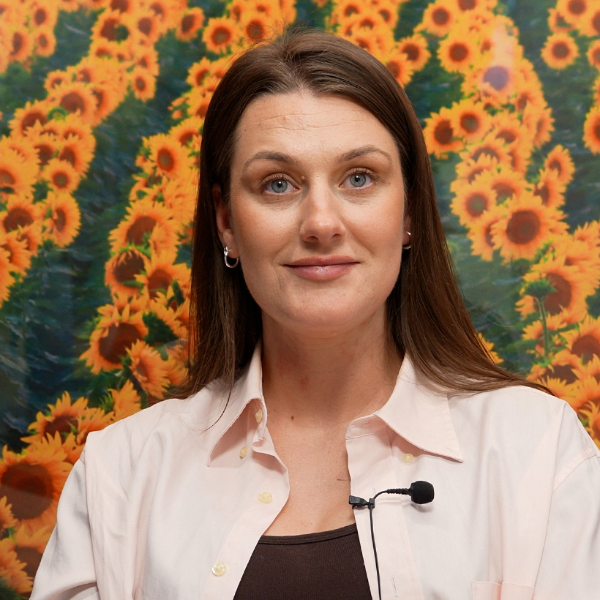
“I really wanted the freedom to design and live my life as I wanted. And I won't lie, I definitely was attracted by the fact that I would have no earning ceiling.”
Whether the motivation is push, pull, or a bit of both, the direction is clear. Solo entrepreneurship is becoming a deliberate first choice for a growing number of people.
Share of respondents · select up to three
FOUNDRS × Werksy survey · n = 50 · directional
Smaller teams. Bigger results.
Among digital micro-businesses in the UK, 17% now generate annual turnover of over £100,000, up from 11% in 2022.7 That is a 55% increase in the proportion of small online businesses crossing a six-figure threshold in just two years.
In the US, the number of one-person businesses generating over $1 million in annual revenue stood at 117,000 in 2023, up from 58,000 in 2021.8 The ceiling for what a single person can build is rising, and AI is the primary reason.
What AI is actually doing
According to the British Chambers of Commerce, 35% of UK SMEs are now actively using AI, up from 25% in 2024.9 Among the founders we surveyed, just over half use it at least weekly and 72% expect their usage to increase over the next 12 months.4
All respondents (n = 50)
72% expect to use AI more, but one in five expect no increase at all.
FOUNDRS × Werksy survey · n = 50 · directional
Research led by Professor Ross Brown at the University of St Andrews, drawing on interviews with nearly 10,000 businesses conducted by the Department for Business and Trade, found productivity gains of between 27% and 133% among UK SMEs using AI tools.10
Noemie, a fashion designer who sells digital sewing patterns and takes on freelance costume projects, described what that means day-to-day.

“A one-hour task can be whittled down to about a five-minute task. I can focus on making more during the day.”
Emily, an acupuncturist two years into running her own practice, described the same principle applied differently: AI handles what happens outside the treatment room so she can focus on why she started.
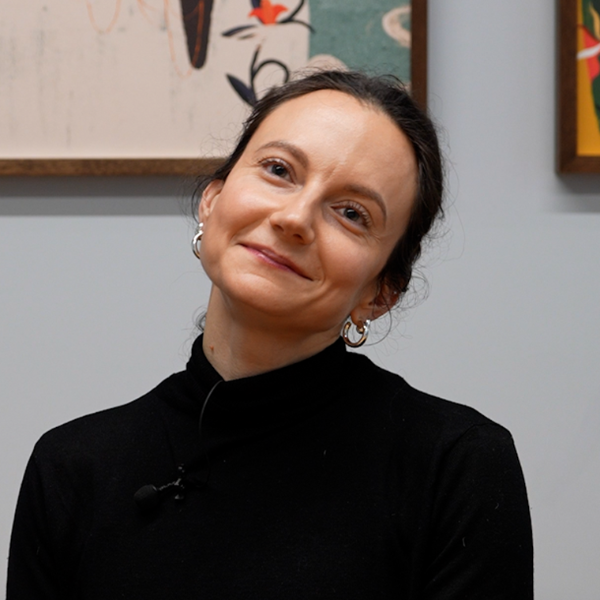
“AI helps me make the tasks outside of the treatment room faster. I'm not using brain energy on that, which I could be using for being with patients, which is why I decided to do what I'm doing.”
Sam described AI as the thinking partner that working alone normally denies you.
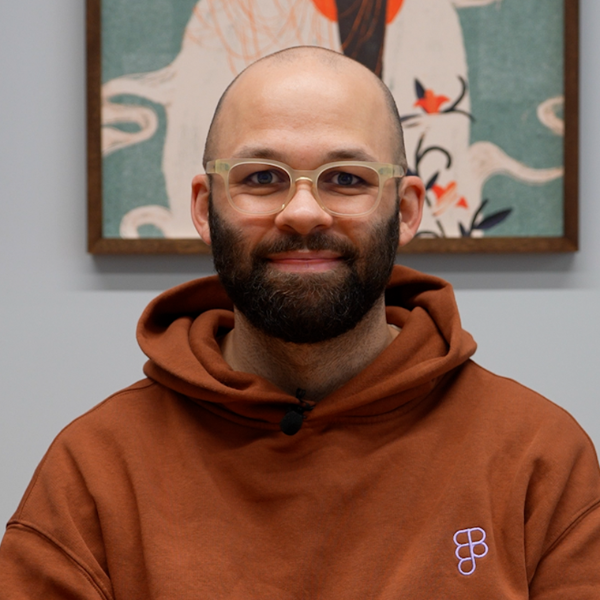
“It's almost like journaling. It forces me to put things down in writing and then also using it to really quickly put together different concepts. Then when I'm spending time with founders, I have a really clear sense of what we're trying to achieve.”
What AI isn't solving. Yet.
The productivity case for AI is real. But our survey revealed a significant gap between the challenges solo founders face and the problems they're applying AI to solve.4
The most commonly cited ongoing difficulties, in order, were:
- 1Marketing and finding customers
- 2Understanding finance and tax
- 3Maintaining motivation and energy
- 4Understanding legal and administrative requirements
- 5Lack of community and colleagues
AI is making inroads into the marketing challenge. Idea generation and writing content were both frequently cited use cases by survey respondents. But just 6 of 50 respondents used AI for financial planning or administration, despite finance and tax ranking second on the list.4 Founders might be using AI to streamline their marketing, but they are struggling to use AI to manage their finance and tax obligations. One costs them hours. The other costs them fines. There is a gap between where they encounter pain and where AI tools are being applied.
Share of respondents · multiple choice
FOUNDRS × Werksy survey · n = 50 · directional
The narrow adoption problem
Tool adoption is heavily concentrated on large language models. Over 80% of survey respondents use ChatGPT or similar. Fewer than 15% use any task-specific tool.4 That matters because a general-purpose LLM isn't designed to guide a first-time business owner through their compliance obligations. It can help draft an email. It can't tell you what you're supposed to file and when, especially if the user is unaware of their compliance obligations and will not set up the necessary prompts.
Emily described feeling overwhelmed by the sheer number of AI tools, without a clear sense of where to start. “Nobody taught me how to use it. There's definitely limitations there.” Sam was the only founder we interviewed who had moved beyond basic prompting, building agents and custom project spaces for specific tasks. For most founders, that level of sophistication remains out of reach.
That education gap partly explains why, when asked to rate their agreement with the statement “AI helps me operate confidently without needing a team,” the mean score was just 2.54 out of 5. Fifteen respondents gave it 1 out of 5.4 AI is improving what founders can do. It is not yet a replacement for external support.
FOUNDRS × Werksy survey · n = 50 · directional
The honest account of going it alone.
The headline numbers can obscure what it actually feels like. The founders we spoke to were candid about three challenges in particular. All three came up consistently across the survey too.
Every founder we interviewed was caught out by the administrative side of running a business. Not because the tasks are impossible, but because nobody tells you what they are until you get something wrong. Noemie described her first year of running a limited company in one word: “terrifying.” She received a letter from HMRC about a confirmation statement she had never heard of. Emily found registering “scary”, not because it was complicated, but because she had no guide.
“I wish there was some sort of hub of information I can rely on so I know exactly what I need to do. My mind feels very dispersed in terms of the finance, the accountant, the compliance. It's a lot of unknowns.”
FOUNDRS supports new business owners by providing them with a clear compliance checklist straight after incorporation. No more surprises. New business owners can navigate their compliance obligations, knowing they will be continuously updated to reflect changes in regulation and in their business context.
Finance and tax was the second most cited challenge in our survey, and it sat beneath the surface of almost every conversation we had. Emily described the stress of dealing with HMRC as something “still quite stressful now,” two years into running her business.
“There's so much change in the HMRC regulations at the moment and so many emails coming through. I don't know what I'm supposed to do.”
For most solo founders, an accountant is the answer, but finding one, affording one, and knowing when you need one are three separate problems. Sam's accountant transformed his business, not just his paperwork. But he wouldn't have known he needed one if the right person hadn't come along at the right time. Emily found her accountant through her father's connections. Sophie found hers on Instagram. Not one founder we interviewed found their way to professional financial support through a formal channel.
FOUNDRS solves that challenge by connecting business owners to trusted partners in a range of categories, including accountancy, at the moment they need them most. Business owners using FOUNDRS will not be reliant on word of mouth recommendations from their immediate network. Instead, they will have access to the partners they need at exclusive rates, enabling them to launch and scale their business with confidence.
Isolation is the challenge that shows up least in the data and most consistently in conversation. Every founder we spoke to mentioned it. Emily described it plainly: “It can be a bit lonely sometimes, owning your own business.” Noemie, who describes herself as a significant extrovert, spoke about how much it matters to her to be around people while she works. Sophie described the particular difficulty of wearing every hat at once.
“You've got to have the hat of the visionary, the manager and the technician, all in the same day. That was probably what I struggled with most.”
Sam described how AI has partially addressed the loneliness of thinking alone. But both Noemie and Emily were clear that a digital tool doesn't replace the experience of being somewhere, around people, doing similar work. Physical workspace solves a different problem to AI. It addresses presence and community, which are things that productivity tools don't touch. However, the subscription model that workspaces typically charge can be prohibitive for solo entrepreneurs that need a more flexible solution. Werksy directly addresses this challenge as their users can scan in and scan out of a range of workspaces on a pay-as-you-go model, giving them flexibility in terms of location, time and cost.
“Werksy doesn't require a restrictive monthly membership. I don't really have a rigid schedule. It's just that flexibility that is so appealing.”
Growth is still genuinely difficult.
The proportion of micro-businesses crossing a six-figure revenue threshold has increased. But the majority are still not there. And growth, for most solo founders, doesn't arrive on a predictable schedule.
Emily moved from Brighton to London two years into running her acupuncture practice and found herself effectively starting again. Her business depends on word of mouth and in a new city, that network had to be rebuilt from scratch.
“For wellness practitioners, it's through word of mouth. Traditional marketing routes sometimes fall on kind of deaf ears.”
There's no version of AI that manufactures patience or accelerates trust. The challenge of finding customers is not a productivity problem. It requires persistence, presence, and time. For many solo founders, those are the scarcest resources of all.
Emily's advice to anyone starting out: “You're going to make mistakes and some of them will be costly. You've got to be tough-skinned.”
What FOUNDRS and Werksy were built to solve.
The founders we spoke to are not unusual. Their experiences (the administrative confusion, the financial stress, the isolation, the difficulty of knowing what to do and when) are consistent across the cohort we surveyed and with the broader data.
These are not edge cases. They are the normal experience of starting and running a business alone. And they are solvable.

“We need more founders. The UK has the appetite. Nearly 30% of working-age adults are running, starting, or planning a business. What it lacks is a starting place that makes the process as straightforward as the ambition behind it.”
Business can be complex. Starting doesn't have to be.
FOUNDRS is a world-first platform to help people start, launch, and manage their business and our mission is to be the starting place for 1 million of them. FOUNDRS helps people to incorporate in minutes, making the process simple and eliminating the jargon. Once incorporated FOUNDRS solves for the things that caught Emily, Noemie, Sam, and Sophie off guard: the confirmation statements, the HMRC deadlines, the question of what you're actually supposed to do and when.
Discover the places that spark focus, flow and fresh ideas.
Werksy addresses the other consistent challenge this report identifies: the isolation of working alone. Werksy gives solo founders flexible access to inspiring workspaces across the UK on a pay-as-you-go basis. No monthly membership, no fixed desk, no commitment. Simply scan in and scan out of your favourite workspaces whenever you feel like it.
It's why FOUNDRS and Werksy are excited to partner so that we can collaboratively support solo entrepreneurs to access the support they need. All FOUNDRS users will be able to access their first visit to any workspace using Werksy completely free of charge.
“Mentally, Werksy has a big impact because it means I'm getting out of my home and it gets me meeting other people.”
Resources for solo founders.
The challenges in this report are specific and consistent. When it comes to navigating business administration and isolation, FOUNDRS and Werksy have developed solutions to support solo entrepreneurs. The resources below are other solutions that directly address the challenges identified in this report.
Staying on top of your finances and tax is essential. One question that a lot of new entrepreneurs ask is whether they need both accounting software and an accountant. Whilst the answer depends on the complexity of your business and your confidence with the basics, we typically recommend entrepreneurs use both. If you need tool or service recommendations, FOUNDRS users can access a six month free trial to Xero and a free consultation with our accountant, Joshua Leigh & Co.
On top of accountancy, business banking is essential for founders to manage their finances and tax. However, 25% of British SMEs are using their personal bank accounts for their business.11 We strongly recommend separating your personal and business bank accounts. Our bank account comparison tool can help you to find the right business bank account for your business.
Underpinning your finances and business administration should be protection. FOUNDRS produced a guide on the top 10 mistakes new founders make. Number 5 in the list was ignoring the legal basics, which is often overlooked in the early stages because it feels more complex than the product being built. Investing in appropriate insurance and using written contracts, prevent one incident from destroying years of hard work. Basic protection is also cheaper than most people think. FOUNDRS users can access a leading insurance broker in Price Forbes and affordable legal support via Sprintlaw.
The isolation of working alone not only means that solo founders need community and connection, but they also need to access people with specialist skillsets in a cost-effective way. Platforms like Fiverr give founders flexible access to freelance talent across design, marketing, development, and much more, without the financial and legal commitments of hiring. Fiverr is accessible via the FOUNDRS platform.
Alongside working with external freelancers, it's also important that founders carve out time to continue their own learning and development. Upskilling in AI tools is going to empower entrepreneurs and enable them to deliver more with less resources. Courses can be found on general e-learning platforms such as Udemy and Coursera. We also recommend exploring AI-specific learning platforms, such as Prompt University.
Disclaimer: The availability of offers on FOUNDRS might change before or after publishing.
Sources
Methodology. The FOUNDRS × Werksy survey was fielded in January 2026 among 50 independent founders and freelancers drawn from the Werksy community. Figures are directional and not statistically representative; percentages are based on the 50 qualifying respondents, and multi-select questions sum to more than 100%.
- 1GOV.UK, "Business population estimates for the UK and regions 2024: statistical release."
- 2Global Entrepreneurship Monitor (GEM), "United Kingdom 2024/2025 National Report."
- 3Global Entrepreneurship Monitor (GEM), "United Kingdom 2023/2024 National Report."
- 4FOUNDRS / Werksy survey, fielded January 2026. n = 50. Directional sample, not statistically representative; respondents drawn from the Werksy community.
- 5IPSE, "The Self-Employed Landscape 2024."
- 6Deloitte, "2025 Gen Z and Millennial Survey."
- 7Enterprise Nation, "Rise in number of UK online micro-businesses turning over £100,000."
- 8Forbes, "Number Of Million-Dollar, One-Person Businesses Keeps Growing."
- 9British Chambers of Commerce, "The Turning Point for SMEs: Unlocking the Next Level of AI."
- 10Small Business Matters, "Small businesses embrace AI for quick productivity wins, study finds."
- 11Pay.UK, "SMEs and payments: challenges and opportunities."
A regular note from the heart of UK start-ups.
Plain-English guides, the odd tax deadline, and a short reading list. No growth hacks.
No spam. Unsubscribe in one click.